
Research chemicals: quality matters

In peptide or biological research, the name of the compound is not the only factor. Research chemicals are only useful if their identity, purity, documentation, and handling from shipment to experiment are trustworthy. Even a small impurity, unclear batch origin, or improper storage can distort the result, prolong the project, and unnecessarily increase costs.
For qualified laboratories, academic teams and independent researchers, purchasing is therefore not just a question of availability. It is a decision about the quality of the input material. For compounds investigated in the areas of cell signaling, metabolism, neurobiology, regeneration or longevity, more than the marketing description of the product needs to be considered.
What is meant by the term research chemicals?
Research chemicals are compounds intended for scientific, analytical or experimental work. In the context of peptide research, they may be used, for example, to study receptor interactions, cellular responses, molecular stability, signaling pathways or analytical methods. Their declared purpose must be clearly separated from clinical use.
Such products are not medicines, food supplements or materials intended for human or animal consumption. The statement „for scientific purposes only“ is not a formal statement on the label. It defines the boundaries within which product selection, experimental design, handling and interpretation of results should take place.
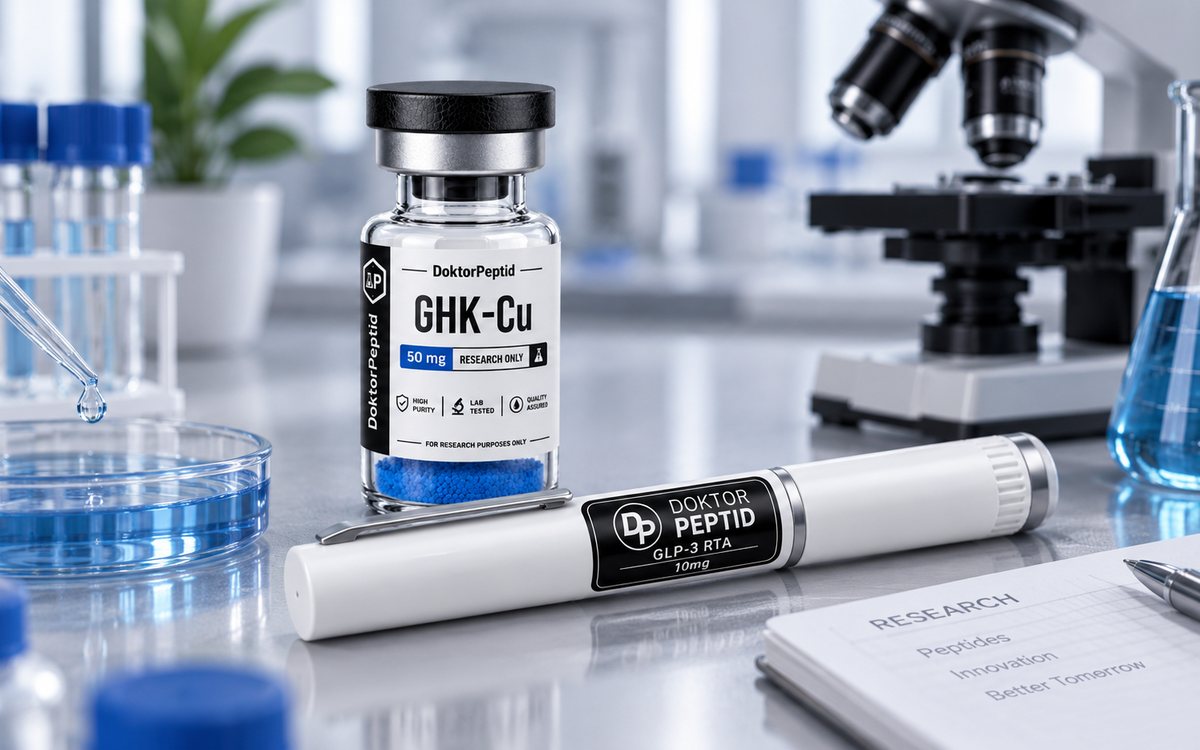
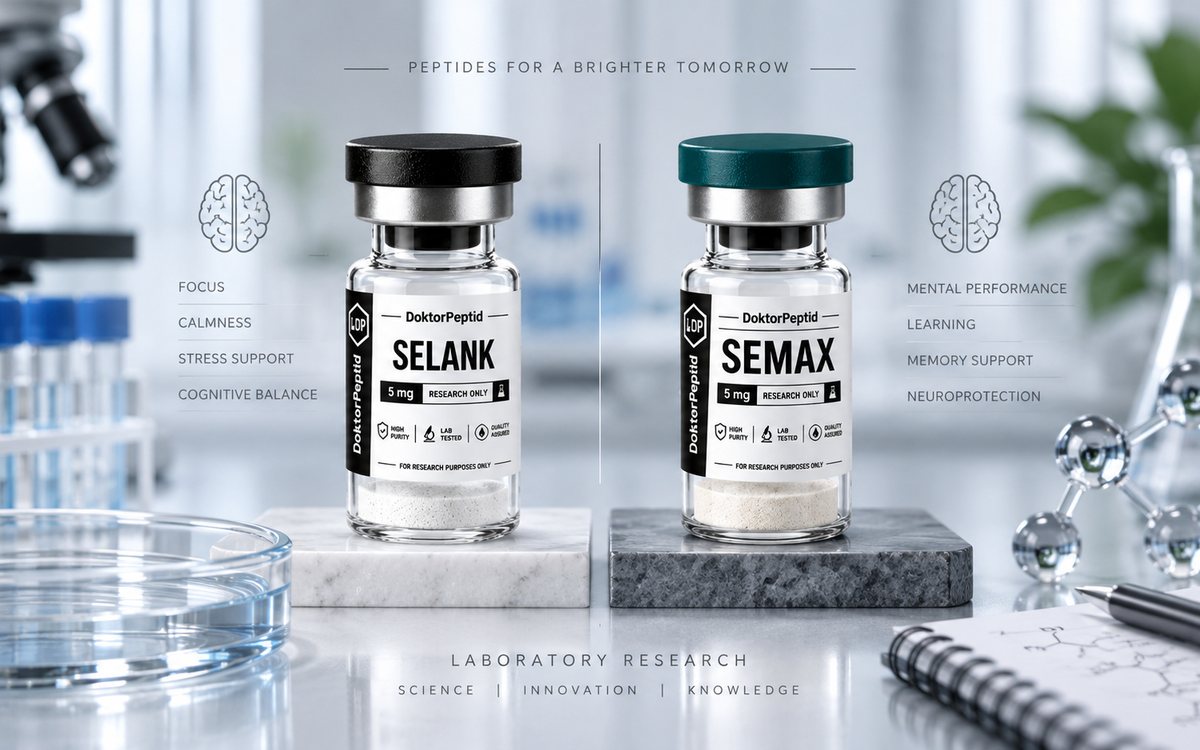
Peptides often work with substances that are the subject of active research. BPC-157 and TB-500 are studied in relation to regeneration processes, GHK-Cu in skin and cell renewal models, Selank and Semax in neurobiological contexts. NAD+ is relevant for cellular energy research, while Ipamorelin, Tesamorelin or Kisspeptin-10 are used in the study of hormone signaling. Retatrutide belongs to the field of metabolic research. However, research interest does not imply a confirmed therapeutic effect or a reason for use outside the laboratory setting.
Cleanliness is not a marketing detail
Declared purity ≥99 % is an important parameter for research material, but it does not in itself fully indicate quality. It is necessary to know the method by which the purity was determined, to which specific batch the result refers, and whether the documentation allows verification of the identity of the analyzed material.
HPLC analysis is a common tool for assessing chromatographic purity. It helps to detect synthesis by-products, degradation components, or other substances present that could interfere with the experiment. However, for peptides, it is appropriate to view HPLC as one part of the analytical picture, not as the sole evidence of quality.
Mass spectrometry completes this picture by confirming molecular weight. While HPLC shows the profile of the separated components, mass spectrometry helps to verify that the analyzed molecule corresponds to the expected structure. The combination of these methods provides a much stronger basis for decision-making than isolated percentage purity given without context.
Even with declared high purity, the nature of the experiment remains important. Sensitive cell models, quantitative comparisons, or long-term studies may have more stringent requirements than indicative screening. The level of control required therefore depends on the methodology, the risk of bias, and the value of the data the project is expected to yield.
What should reliable batch documentation contain?
The certificate of analysis, often referred to as a COA, should be linked to a specific batch number. This allows the laboratory to link the document to the material actually received. Useful information includes product identity, batch number, declared purity, analytical method used, date of analysis, and storage conditions.
A trustworthy vendor does not hide quality issues behind the general phrase „laboratory quality“. On the contrary, they allow for batch documentation to be requested and clearly explain what the individual analyses confirm and what their limits are. Transparency does not mean claiming that a single document replaces the laboratory’s own input inspection. It means providing documentation on the basis of which the material can be assessed in a qualified manner.
Supplier selection is part of the methodology
When procuring research compounds, it pays to evaluate the supplier in the same way as you would any other critical source of laboratory material. Price is relevant, but the lowest price without traceable analysis can mean higher costs when it comes to repeating a series of experiments or explaining non-standard results.
Consistency is especially important. Does the vendor have a defined batch quality control process? Are products labeled correctly? Is information about purity and storage specific, not general? Can support answer substantive questions about documentation and availability? For products available directly online, it is equally important that the ordering process does not sacrifice professional accuracy in favor of a quick sale.
DoktorPeptid bases the selection of research peptides on declared purity ≥99 %, HPLC analyses, the possibility to request a batch analysis protocol, and a clearly defined scientific purpose. It is practical for the researcher if high-quality data is available without lengthy procurement, but the decision should always be based on the needs of the specific protocol.
Logistics affects the condition of the material
Fast shipping is not just a convenience. For sensitive materials, it shortens the time between order release and shipment receipt. However, the entire logistics process must also be considered: packaging method, product protection, shipment labeling, and the ability to track when the material was delivered.
Upon receipt, it is wise to record the batch number, packaging condition, date of receipt, and storage location. This simple step supports internal traceability. If a data discrepancy later arises, the team can better distinguish whether it is related to the experimental design, the workflow, or a specific input material.
Storage protects the interpretability of results
Proper storage doesn't start after you open the package. It starts by checking the information on the label and in the documentation. Research peptides they may be sensitive to temperature, humidity, light or repeated changes in conditions. There is no universal rule for all molecules, therefore preference is given to manufacturer's recommendation and internal laboratory procedure.
A practical risk is particularly unclear recordkeeping. If multiple team members work with the same material without a record of the batch, date of opening and storage, the reproducibility of the work is reduced. Reasonable organization includes labeling the sample, recording movement and minimizing unnecessary exposure to unsuitable conditions.
When planning an experiment, it is also important to consider whether sufficient volume from one batch is available. In comparative or longer-term studies, changing the batch may introduce an additional variable. This does not mean that the new batch cannot be used, but it is advisable to document its inclusion and perform appropriate input control depending on the nature of the project.
How to work with information without jumping to conclusions
Good product documentation does not excuse inaccurate interpretation of research. A result obtained in vitro is a result in a specific model, under specific conditions and with specific material. It should not be automatically transferred to humans, clinical practice or other biological systems.
The same caution applies when reading product descriptions. A meaningful description helps to place a compound in the research field, but does not promise a result. A serious communication states the known mechanistic connections, analytical parameters, and legal limitations without making health claims from laboratory data.
Therefore, the most valuable combination for a laboratory is a clearly formulated research question, material with a verifiable origin, and disciplined recordkeeping. If questions about batch, analytical documentation, and storage cannot be answered quickly when ordering a research chemical, this is a reason to slow down – not a detail to be resolved later.
The best experiments don't start with the instrument. They start with the decision to choose a material whose quality can be documented, to properly incorporate it into the laboratory process, and not to exceed the limits for which it is designed.
Related products
Produkty, ktorých sa táto téma týka: Ipamorelin – skladom na Slovensku, Tesamorelin – skladom na Slovensku, BPC-157 – skladom na Slovensku, TB-500 – skladom na Slovensku. Ceny a dostupnosť nájdete v sekcii všetky produkty, doplnky ako dávkovacie perá a zvýhodnené balíčky sú v samostatných kategóriách.
Všetky produkty sú určené výhradne na laboratórny výskum.

2 comments