
What affects peptide stability in the laboratory

A lyophilized peptide may look flawless upon receipt, but its usability in research is not determined by the appearance of the vial alone. Peptide stability determines whether the compound will maintain its chemical identity, declared purity, and reproducible properties during transport, storage, and sample handling. In sensitive research models, even a seemingly small change in the sample can distort the result more than the difference between two experimental conditions.
For the laboratory, stability is therefore not an additional parameter. It is part of the quality control that begins with production and analytical verification of the batch, continues with proper handling after delivery, and ends with thorough documentation of sample work. Products intended exclusively for scientific purposes require the same discipline, regardless of whether the peptide mechanisms of regeneration, neurobiology, metabolism, or cell signaling are being investigated.
What does peptide stability mean?
A peptide is a chain of amino acids linked by peptide bonds. Its stability describes its ability to resist chemical and physical changes that could alter the composition, spatial arrangement, or amount of intact material in a sample. So it’s not just a question of whether a peptide „lasts a long time.“ It also depends on the conditions under which it is stored, the solvent it is in, and how many times it has been exposed to temperature changes.
Degradation can involve, for example, hydrolysis of peptide bonds, oxidation of sensitive amino acids, deamidation, or aggregation. The specific risk profile depends on the sequence. A peptide with oxidizable residues may be more sensitive to contact with air, while another will be more responsive to inappropriate pH or repeated freezing and thawing. Therefore, there is no one universal condition that would protect every peptide equally.
Stability also has an analytical dimension. The researcher needs to be able to distinguish between a true change in the sample and an error in preparation, dosing, or measurement. HPLC analysis can help monitor purity and the presence of side peaks, while mass spectrometry supports verification of the molecular weight and identity of the analyte. These data are most valuable when linked to a clear batch and handling history.
Factors that alter peptide stability
Temperature and its fluctuations
Temperature is one of the most important factors in degradation. Higher temperatures generally accelerate chemical reactions, so leaving the material outside the recommended regime for longer periods may increase the risk of loss of integrity. For lyophilized peptides, low temperatures are particularly important for long-term storage, but the manufacturer's specific data and the properties of the compound are always decisive.
Consistency is also essential. Short, repeated fluctuations can be more problematic for a sensitive sample than a single controlled transfer. It therefore makes sense to place the material in an appropriate storage regime without undue delay upon delivery and to record any deviations if they occur.
Moisture, oxygen and light
Freeze-drying reduces the water content but does not mean complete immunity to the environment. Moisture can promote hydrolysis and change the physical properties of the powder. Oxygen can contribute to oxidation, especially for sensitive amino acid sequences. For some substances, light is an additional factor that can initiate or accelerate photochemical changes.
The practical basis is to keep the vial properly closed, protect it from unnecessary exposure, and minimize the time the material is in an inappropriate environment. This is not to be overly cautious. For small amounts of research compound, even limited degradation can significantly affect the concentration of usable analyte.
pH, solvent and concentration
After reconstitution stability often changes more significantly than with dry material. The aqueous environment allows reactions that were suppressed in the lyophilized state. pH can affect the charge of the molecule, the rate of hydrolysis and the tendency to aggregation. An inappropriately chosen solution may not lead to an immediately visible change, but can gradually impair the reliability of the results.
Concentration is also important. At low concentrations, some of the peptide may adsorb to the surface of the laboratory material, while at higher concentrations, the risk of aggregation or precipitation may increase for certain sequences. The correct choice of solvent and laboratory consumables is therefore based on the experimental purpose, available data on the compound, and validated workflow.
Repeated freezing and thawing
Repeated temperature cycling can change the local salt concentration, pH, and distribution of the peptide in solution. The risk is not the same for all molecules, but for valuable or sensitive samples it is wise to prepare working aliquots in volumes appropriate for the planned experiment. This will reduce the need to reopen, freeze, and thaw the entire stock solution.
This step also improves traceability. If one working fraction shows an unusual result, the laboratory can more easily assess whether the problem is with the biological model, the analytical method, or a specific aliquot.
How to combine warehousing with quality control
Trustworthy research work does not start with pipetting. It starts with selecting material with clearly declared parameters. Declared purity ≥99 % is a relevant starting point, but not a stand-alone guarantee of suitability for each experiment. The researcher should know by what method the purity was assessed, to which batch the document refers, and whether a batch analysis report can be requested.
The HPLC chromatogram provides a useful insight into the purity profile, but it is important to read it in context. A high major peak supports the assessment of purity, while smaller peaks may represent process impurities, degradation products, or synthesis-related substances. Mass spectrometry completes the picture by confirming the expected molecular weight. For more demanding projects, it is useful to compare the input analytical data with a sample control after defined storage or after the working phase of the experiment.
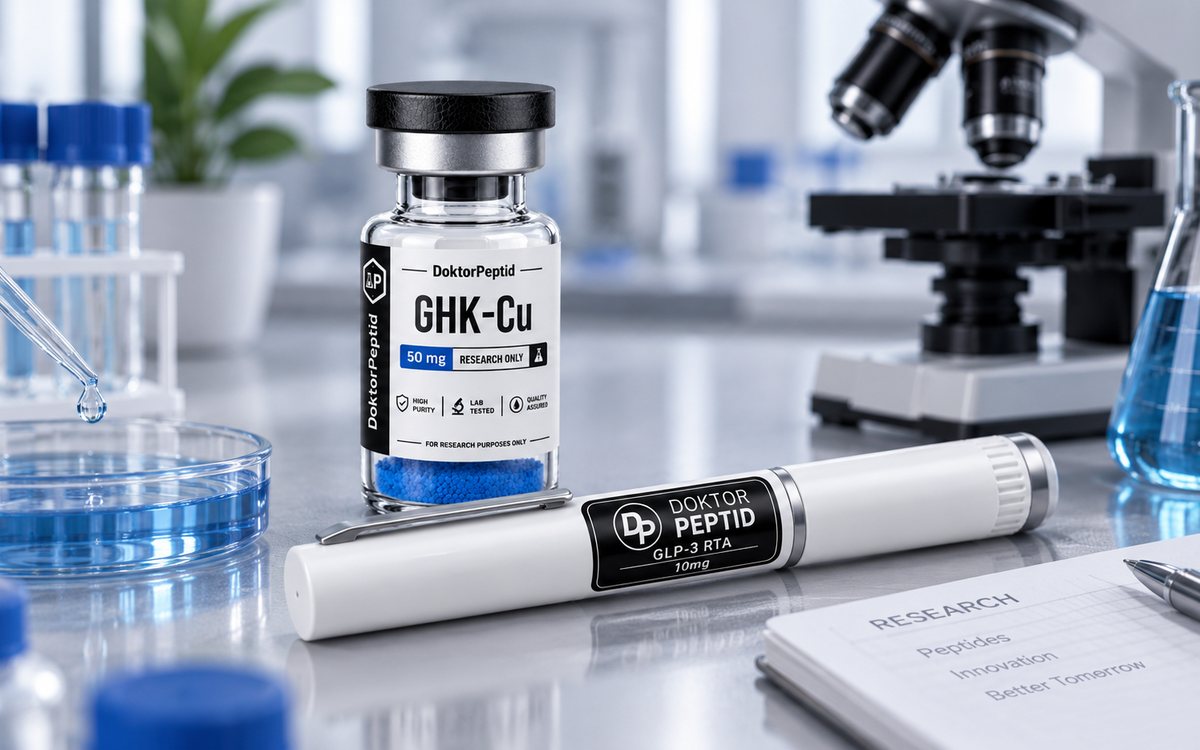
At DoktorPeptid, the emphasis on declared purity, HPLC analysis and batch quality control is a practical answer to the need for a documentable origin of the material. However, even the best input analysis does not replace proper handling in the laboratory. Once taken over, responsibility for storage conditions passes to the workplace.
A practical framework for working with a sample
A simple but consistent system works well for peptide research. When receiving material, record the batch identification, date of receipt, declared storage conditions, and available analytical documentation. Label vials so that they can be clearly assigned to the record, not just the informal project name.
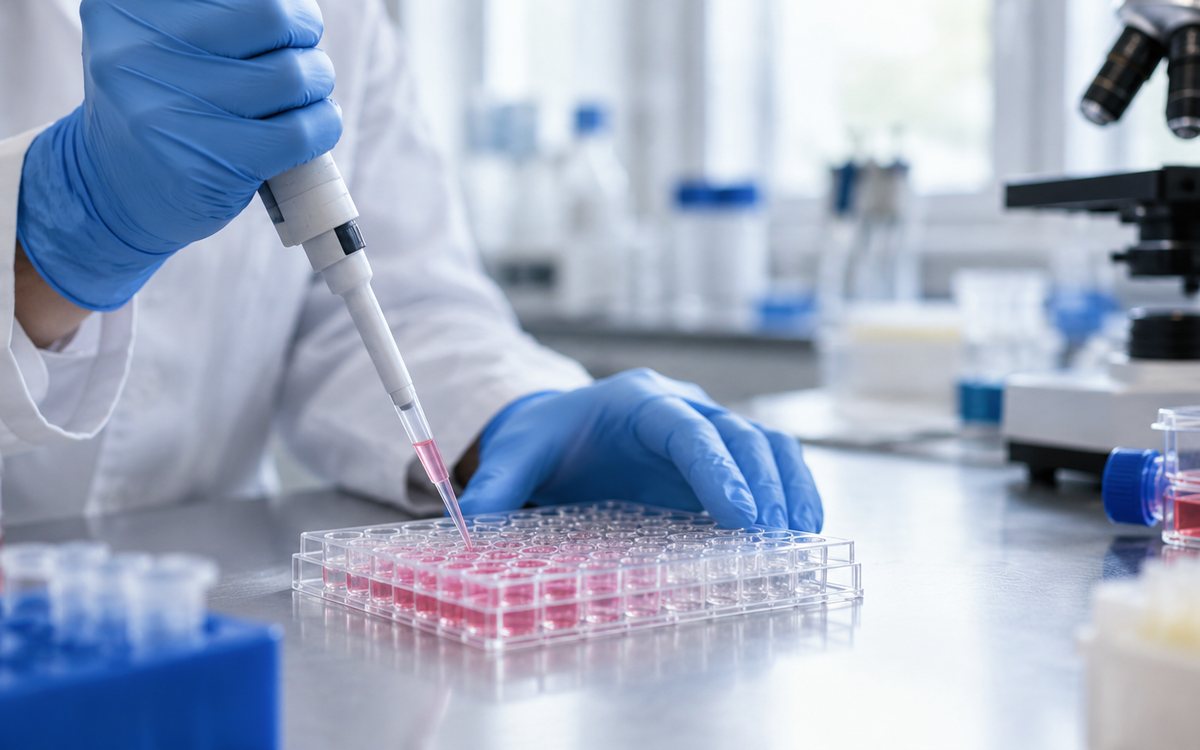
Before reconstitution, verify that the chosen procedure is appropriate for the specific sequence and planned analysis. After preparing the solution, record the solution used, concentration, date, person performing the preparation, and number of working aliquots. For longer studies, it is useful to define in advance when the appearance, chromatographic profile, or biological response of the control sample will be assessed.
Also pay attention to laboratory cleanliness. It is not just about microbiological contamination. Traces of detergents, residues from improperly cleaned equipment, or incompatible plastic can alter the analytical result or reduce the amount of peptide available. If results do not agree between replicates, the storage and handling history of the sample is one of the first areas to check.
When to be careful
Visible color change, turbidity, precipitate or unexpected behavior during analysis are reasons to stop working with a given sample, not to seek a quick explanation. The absence of visible change, on the other hand, does not confirm stability. Many degradation processes occur without being visible to the naked eye.
Also risky are discrepancies between the documentation and the vial label, unclear temperature history, or a sample that has repeatedly undergone unplanned temperature cycles. In such cases, it is more reasonable to work with the material only after adequate analytical assessment or to discard it from the experiment. The cost of the sample is less than the cost of uninterpretable data and the time spent repeating it.
Peptide stability is not a one-off property listed in the documentation. It is a chain of decisions from the selection of a validated batch to the final measurement. When each vial has a clear origin, controlled conditions, and a record of handling, the results gain exactly the support that serious research needs.
Related products
Produkty, ktorých sa táto téma týka: Baktériostatická voda – skladom na Slovensku. Ceny a dostupnosť nájdete v sekcii všetky produkty, doplnky ako dávkovacie perá a zvýhodnené balíčky sú v samostatných kategóriách.
Všetky produkty sú určené výhradne na laboratórny výskum.
1 comment