
What does peptide purity mean in laboratory research?
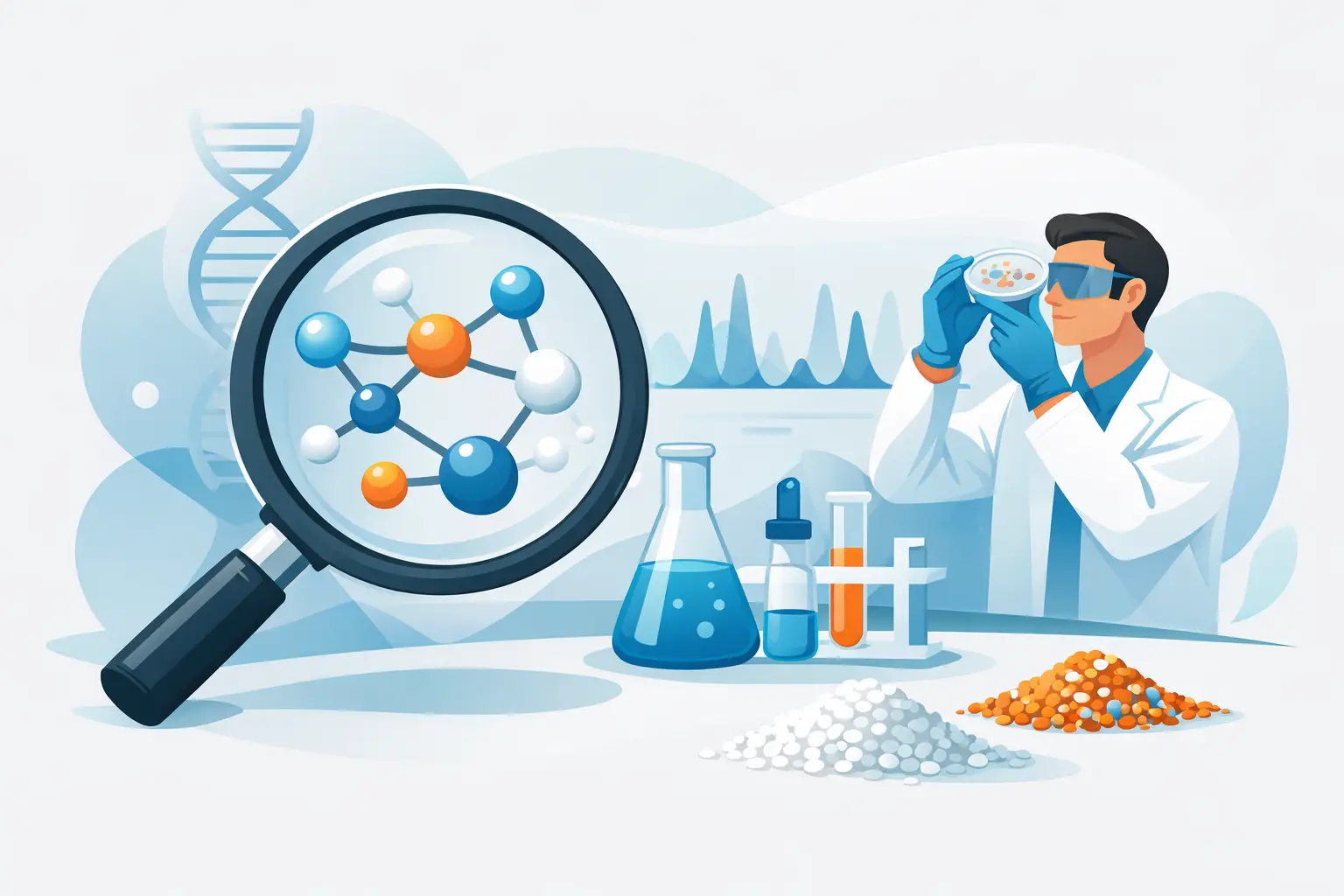
When comparing research peptides, it is not enough to look at the compound name and the amount in the vial. Question, What does peptide purity mean?, directly determines how reliably the results of the experiment can be interpreted. Purity describes what proportion of the analyzed material is the desired peptide and what proportion is represented by other substances or related by-products.
When working with bioactive compounds, this is a practical parameter, not a marketing number. The difference between a sample with a declared purity of ≥99 % and material of unclear origin can affect the reproducibility of cell tests, the interpretation of dose-response, and the comparison of results between laboratories. However, purity alone is not everything. It must be considered together with the identity, batch documentation, storage method, and the purpose of the particular experiment.
What does peptide purity mean in analytical practice?
A peptide is a chain of amino acids arranged in a precisely defined order. After chemical synthesis, the material may also contain substances that have a very similar structure but are not the target peptide. For example, these may be incompletely synthesized sequences, peptides with a missing amino acid, oxidation products, or residues from the manufacturing process.
When a purity of 99% is stated, this usually means that approximately 99% of the chromatographic signal under the defined analytical conditions corresponds to the major component of the sample. The remaining percentage should not automatically be perceived as one specific impurity. It may consist of multiple minor peaks, each with a different chemical character and potentially a different impact on the experiment.
It is essential for the researcher to distinguish between the terms purity, identity and peptide content. Purity answers the question of how homogeneous the sample is from the point of view of the analytical method used. Identity confirms that the main component is indeed the declared molecule. Peptide content, in turn, can take into account, for example, water, salts or counterions present in the material. These parameters are related but not interchangeable.
How is peptide purity measured using HPLC?
The most commonly used method for checking peptide purity is HPLC analysis, or high-performance liquid chromatography. The sample is dissolved in a suitable solvent and passed through a chromatographic column. The individual components move at different speeds in it according to their chemical properties, especially polarity and interaction with the stationary phase.
The result is a chromatogram – a record of peaks at specific retention times. The main peak usually represents the target peptide, while minor peaks may indicate impurities or related compounds. The area of the main peak is compared to the total area of all relevant peaks, and the declared chromatographic purity is calculated from this ratio.
However, HPLC is not a universal quality judgment. The result depends on the column used, the mobile phase, the gradient, the detection wavelength and the method of peak integration. Two laboratory protocols can give slightly different values for the same sample. Therefore, it makes sense to ask for the batch analysis protocol, not to rely only on an isolated number on the product page.
Why HPLC complements mass spectrometry
While HPLC effectively separates the components of a sample, mass spectrometry helps confirm the molecular weight of the analyzed peptide. A specific molecular weight is expected for a declared sequence. Its agreement with the measured result provides important support in verifying the identity of the main component.
However, mass spectrometry alone may not reveal all possible problems. Compounds with similar masses or isomeric forms may require additional chromatographic or specialized analytical procedures. Serious quality control therefore does not rely on a single data point, but on a combination of appropriate methods and transparent documentation.
What impurities may appear in the sample?
Several categories of impurities can arise during peptide synthesis and manipulation. Their significance depends on the sequence, stability of the molecule, and the research model. Common ones include:
- shortened or incompletely synthesized peptide chains,
- peptides with modified amino acid or misbinding,
- products of oxidation, hydrolysis or other degradation,
- residues of solvents, reagents, salts or counterions.
Some of these components may be analytically easily distinguishable, while others require more sensitive methods. In cell-based assays, even minor impurities can complicate interpretation, especially if they have their own biological activity or interfere with the physicochemical properties of the medium. This is one reason why an unverified material cannot be compared to a documented research compound based solely on the label on the packaging.
Is purity ≥99 % always necessary?
Not automatically. The level of purity required depends on the experimental design, the sensitivity of the model used, the required precision, and the availability of controls. In screening or methodological tests, consistency between samples may be particularly important. In mechanistic research, comparisons of small differences in activity, or publishable data, high purity and rigorous analytical documentation carry greater weight.
The nature of the peptide itself is also important. Some sequences are more susceptible to oxidation, aggregation or degradation after reconstitution. Thus, even an initially high-quality batch may mistreatment lose some of its integrity. The declared purity therefore refers to the material analyzed at a specific time and under specific conditions, not to any future manipulation in the laboratory.
What to look for when choosing a research peptide
First, check that the supplier clearly states the declared purity, for example ≥99 %, and the method by which it was determined. An HPLC chromatogram or batch analysis report provides significantly more information than a general claim of „pharmaceutical quality“, which without substantiation is not sufficiently informative in a research context.
Next, verify the batch designation, product identity, and availability of a COA, or Certificate of Analysis. This document should link the specific batch delivered to the stated analytical parameters. Also important are shipping conditions, moisture- and light-resistant packaging, and clear recommendations for storage before reconstitution even after it.
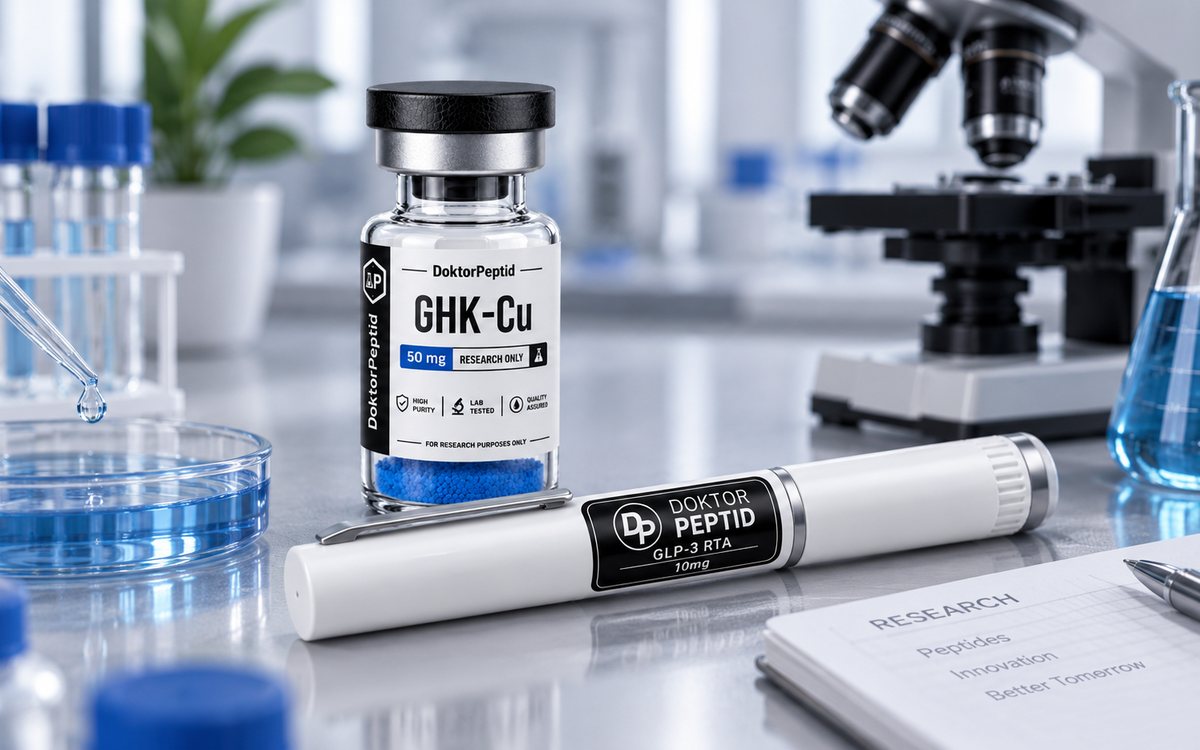
DoktorPeptid works with a declared purity of at least 99% for research products, HPLC analyses and the option to request a batch analysis protocol. This approach allows the laboratory to include qualitative data directly into its own documentation and better plan control experiments.
Peptide purity and proper storage
Quality does not end with delivery. Lyophilized peptide should be stored according to the manufacturer's instructions, typically in a cool, dry place and out of direct light. Before opening, the packaging should be acclimatized to limit moisture condensation. Repeated heating and cooling cycles may impair the stability of the material.
After reconstitution, work with suitable solvent, use clean laboratory techniques, and minimize the time the solution is exposed to inappropriate temperature or light. For longer storage of solutions, it makes sense to aliquot to avoid repeated thawing. The specific procedure must always be based on the properties of the peptide and internal laboratory rules.
High purity is therefore the beginning of a controlled process, not a substitute for good experimental practice. When analytical data are available for each batch, the material is stored appropriately, and the results are evaluated with appropriate controls, peptide research is on a much firmer footing. The products are intended for in vitro scientific purposes only and are not intended for human or animal consumption.
Related products
Produkty, ktorých sa táto téma týka: Baktériostatická voda – skladom na Slovensku. Ceny a dostupnosť nájdete v sekcii všetky produkty, doplnky ako dávkovacie perá a zvýhodnené balíčky sú v samostatných kategóriách.
Všetky produkty sú určené výhradne na laboratórny výskum.
2 comments