
BPC-157 for in vitro research in the laboratory

BPC-157 for in vitro research is not a question of the mere presence of the peptide in the test tube. The quality of the result is determined by the entire chain of decisions - from the identity and purity of the material, through its reconstitution and stability, to the appropriately chosen cell model, controls and method of data interpretation. For a peptide of significant interest in the preclinical literature, methodological discipline is the difference between an observation and a reproducible result.
BPC-157 is a synthetic peptide consisting of 15 amino acids, often described in connection with a fragment originally isolated from gastric juice. The available scientific literature relies heavily on preclinical models. This allows for further mechanistic research, but also requires caution in transferring findings between different models. An in vitro system answers a well-defined question in a controlled environment, not all biological implications of an organism.
BPC-157 for in vitro research: first formulate a hypothesis
Before choosing a plate, cell line, or analytical method, it is useful to answer one question: what phenomenon is the experiment really testing? A vaguely constructed project like „test the effect of BPC-157 on cells“ results in a broad set of data that is difficult to interpret. A more precise hypothesis might examine, for example, changes in cell migration, viability, adhesion, inflammatory signaling, or expression of specific markers.
Such refinement determines everything else. A different design is appropriate for screening for cytotoxicity than for monitoring gap closure in a monolayer. When assessing a signaling response, it is necessary to distinguish early time points from later changes in gene or protein expression. A single method is usually not sufficient to confirm a complex biological interpretation.
The choice of model depends on the research question. Primary cells may better preserve physiological properties, but are characterized by higher variability and limited availability. Immortalized lines are more practical for standardization and repetition of experiments, but may not faithfully represent a specific tissue environment. In both approaches, it is important to record passage, culture status, cell density, and mycoplasma control results.
Peptide quality is part of the experimental design
For research peptides, analytically verified material is a prerequisite, not a super-standard. Declared purity ≥99 % supported by HPLC analysis helps to limit the risk that the measured response is affected by an unknown impurity. However, HPLC mainly answers the question of chromatographic purity. Mass spectrometry is also relevant to confirm the expected molecular weight.
The researcher should be able to work with a clearly marked batch and request batch analysis protocol. Documentation should be associated with the specific material, not just a general statement about the quality of the product. When comparing results over time, batch traceability is extremely practical: if the response of the cells changes, biological variability can be separated from possible material variation.
Equally important is adequate storage. A lyophilized peptide, repeatedly exposed to inappropriate temperature, humidity, or unnecessary freeze-thaw cycles, may not have the same properties as freshly and properly stored material. After reconstitution It is advisable to work with aliquots to limit repeated handling of the stock solution. Specific conditions should always be adapted to the manufacturer's data, internal laboratory procedures and validation in the given system.
For products intended solely for scientific purposes, it is essential to maintain the legal and operational framework. BPC-157 is not a drug, dietary supplement, or material intended for human or animal consumption. Laboratory labeling, inventory management, and handling documentation should clearly reflect this purpose.
Concentration, vehicle and controls determine credibility
The concentration range should not be based on a single number taken from another article. Differences in cell type, medium, culture density, exposure time, and measurement method can significantly change the observed response. It is more appropriate to create a concentration curve with a sufficient number of points and evaluate it together with the time dependence.
The vehicle is another often underestimated factor. Each solvent or additive used in sample preparation must have its own vehicle control at the same final concentration as the test cells are exposed to. Without it, it is not possible to reliably distinguish the response to the peptide from the response to the vehicle itself.
A basic experiment therefore usually includes an untreated control, a vehicle control, and multiple concentrations of the test peptide. Depending on the research question, a positive control may also be necessary to verify that the assay used is capable of recording the expected type of biological change. Technical replicates reduce the impact of random measurement error, but biological replicates are essential for assessing reproducibility between independent experiments.
For absorbance, fluorescence, or luminescence-based assays, it is necessary to verify in advance that BPC-157 or vehicle components do not interfere with the assay signal itself. Controls without cells, but with appropriate reagents and test compound, may reveal optical or chemical artifact before it affects interpretation.
Stability in the cultivation environment is not a given
The peptide may be subject to adsorption to plastic surfaces, enzymatic degradation, or interactions with serum and other media components in the cell medium. The nominal concentration prepared in the stock solution may therefore not accurately represent the concentration to which the cells are actually exposed throughout the incubation.
For sensitive mechanistic designs, it makes sense to monitor stability analytically in a relevant matrix and time window. If such validation is not available, the limitation should be transparently stated in the laboratory record and in the presentation of results. This is especially true when comparing short and longer exposures.
How to read the results without jumping to conclusions
A positive signal in one cell line does not confirm a universal mechanism. It may be a response specific to the cell type, the medium used, or the current culture condition. If the result indicates a change in migration, it is advisable to also check proliferation and viability, as these phenomena can affect the same readout in different ways.
Similarly, a change in a single gene or protein marker does not, by itself, prove activation of the entire signaling pathway. Stronger evidence is provided by a combination of a functional assay, orthogonal measurements, and appropriate controls. Sometimes the most valuable result will be the finding that an effect is not reproducible in a particular model. Negative data also protect other projects from making incorrect assumptions.
Statistical processing should be planned before data collection. This involves not only the choice of test, but also the determination of the primary endpoint, the number of independent replicates, and rules for excluding technically defective samples. The additional selection of only favorable comparisons increases the risk of significant findings by chance.
Practical documentation from batch acceptance to report
Clear documentation saves time when repeating the experiment and during internal audits. The record includes batch identification, analytical documents, date of receipt, storage conditions, solution preparation, vehicle used, cell model, passage, exact exposure time, instrument settings, and raw data.
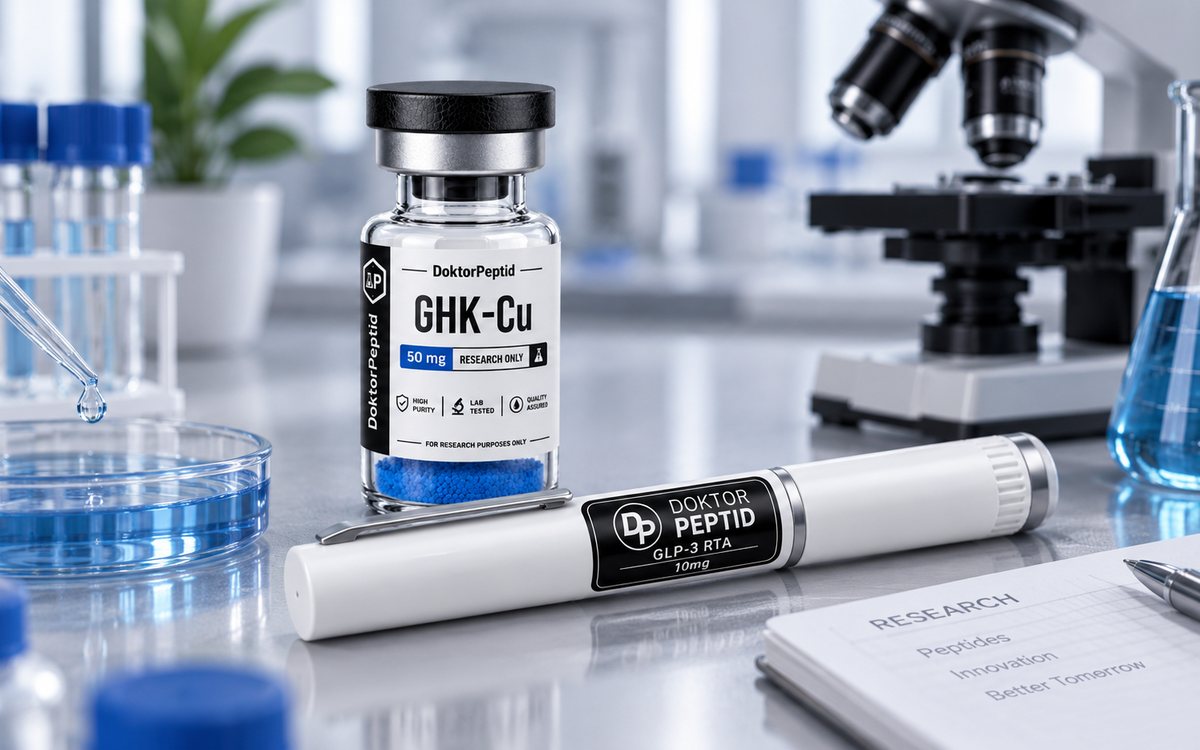
Therefore, when choosing a supplier, do not look only at the declared purity value. The availability of HPLC analysis, the ability to request batch documentation, clear storage information, safe packaging and logistics that minimize unnecessary material delays are important. DoktorPeptid bases its offer of research peptides on the declared purity of ≥99 %, batch quality control and the availability of analytical documentation for qualified laboratory use.
The best next step when working with BPC-157 is not to look for one universal protocol. It is to set up a small, well-controlled pilot experiment that validates the behavior of the material in your specific model. This will create a foundation of data that can be responsibly built upon.
Related products
Produkty, ktorých sa táto téma týka: BPC-157 – skladom na Slovensku, Nad+ – skladom na Slovensku, Baktériostatická voda – skladom na Slovensku. Ceny a dostupnosť nájdete v sekcii všetky produkty, doplnky ako dávkovacie perá a zvýhodnené balíčky sú v samostatných kategóriách.
Všetky produkty sú určené výhradne na laboratórny výskum.


2 comments